Vernon W. Campbell, tough or tender

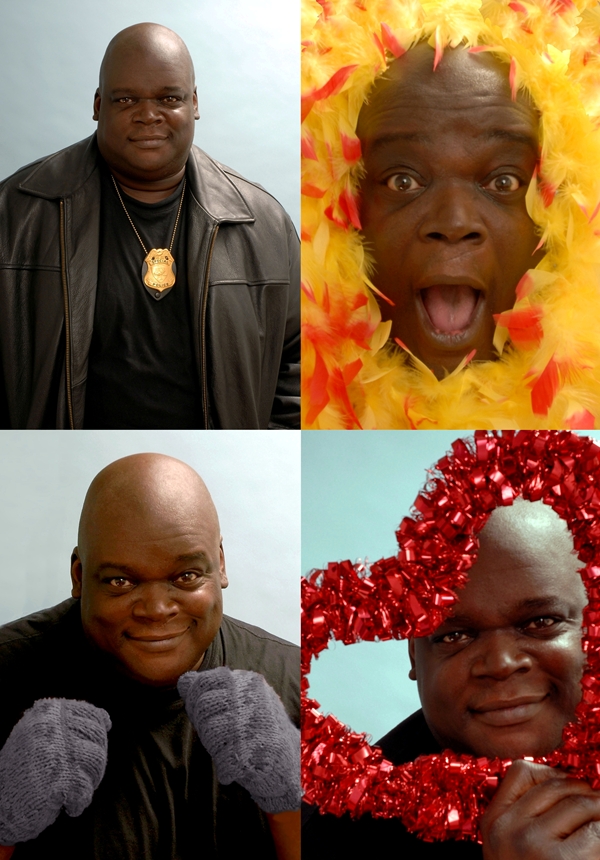
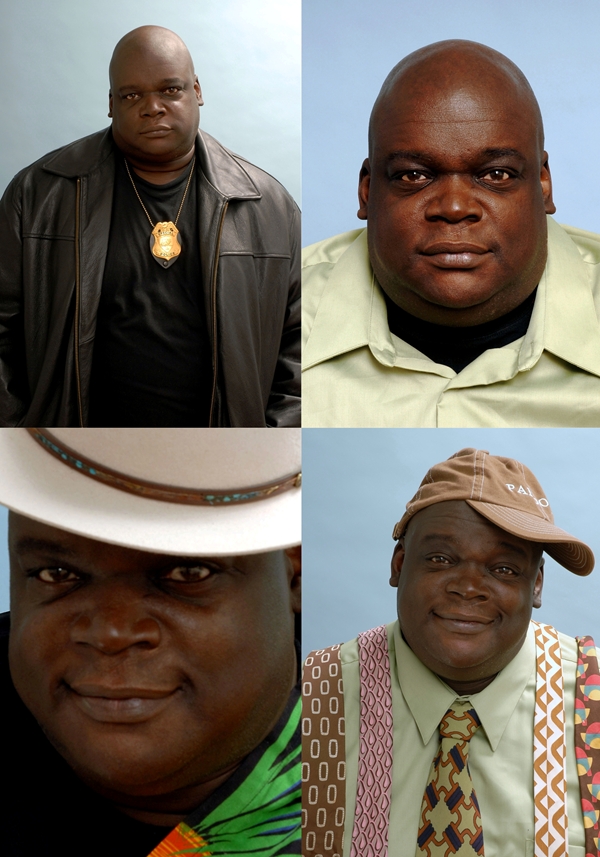
You’ve seen Vernon W. Campbell as good cops, bad cops, ornery inmates, bouncers, all sorts of tough guys. He’s actually a fine gentleman, helps a bunch of  local performers navigate show business, and keeps busy himself as a working actor with SAG, AFTRA and Actors’ Equity affiliations. Andy Garcia’s “City Island,” which opened in mid-March, has Vernon’s latest big screen appearance, and he’s been seen in “Mercy,” the TV hospital drama. One of the great Oscar underdogs, Mickey Rourke’s “The Wrestler,” has him playing the bouncer at the strip joint where Marisa Tomei dances.  HBO’s “Oz” is also on Vernon’s resume. This winter he said he could use some new headshots, so I told him to show me his faces and we did a shoot the afternoon before he got on a plane to Hollywood to make the networking rounds of the Oscar night parties. I pushed him a bit to give me more of his range, and here’s the result. I asked if he’d ever consider playing a happy mailman or a kiddie show character. “Of course,” Vern smiled. “I even want to play Shakespeare before I’m through, just nobody’s asked me yet.”
VernonWCampbell600top

2ndVern600


The Distillery opens in Jersey City Heights

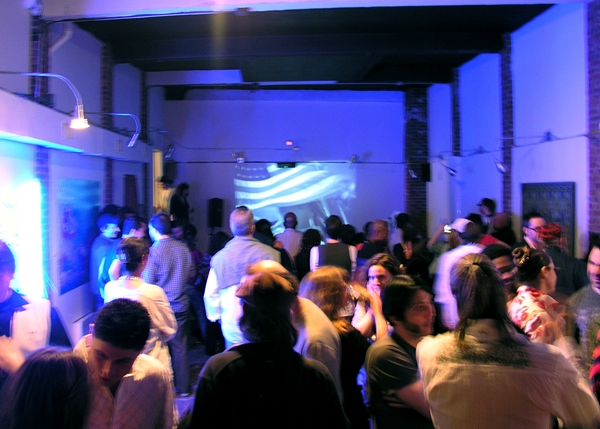
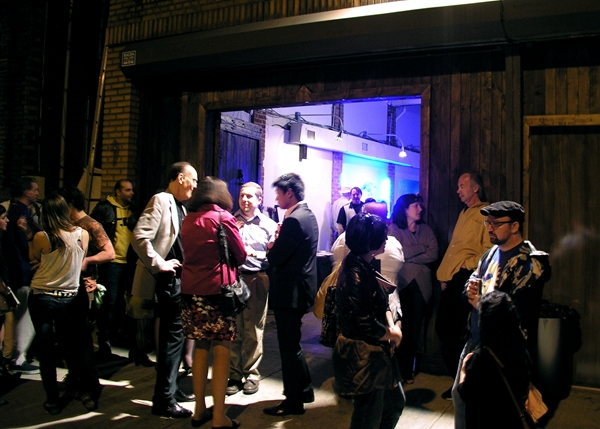
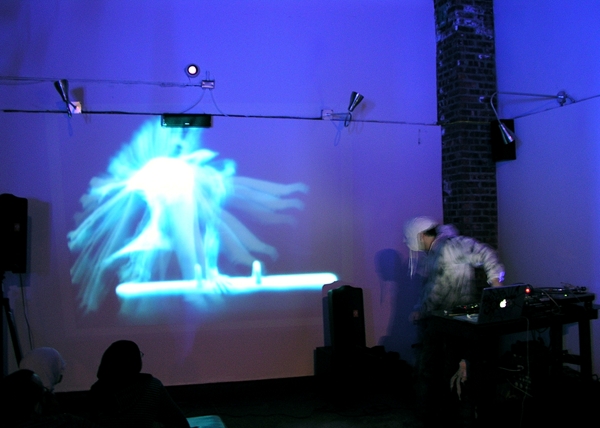
The Distillery Gallery & Artspace opened Saturday, March 20, on Hutton Street just off Palisade Avenue in Jersey City. The space is a former garage located behind the Palisade Wine and Spirits store, also owned by Bhavin Patel, which has been a neighborhood asset for several years. Irene Borngraeber put the space together and has curated the first show, Splice, which will be up until May 1. The opening featured a sound and media performance by Gocha Tsinadze and Eto Oro titled “the waiting,” some good wines for tasting, and samples from a new Jersey City-based business — Spicy Sue’s medium and hot salsas — presented by Sue herself. The good vibes could be felt all the way around the corner and down the block. This is just the kind of gathering space, not to mention art venue, that the Jersey City Heights has been needing. It’s a pleasure to welcome it to the neighborhood.
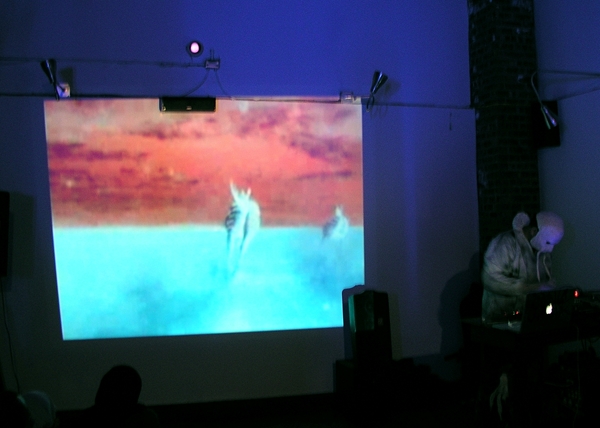
SMYFDistilleryOne

SMYFDistilleryTwo

SMYFDistilleryFour

SMYFDistilleryFive

SMYFHiroshiKumagai

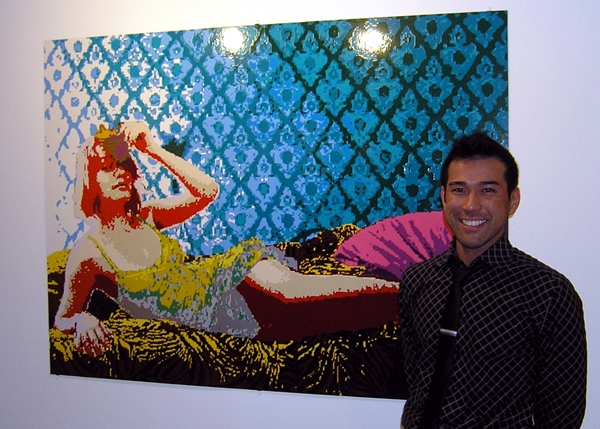
Hiroshi Kumagai, a Newark artist whose work i’ve admired before, has work on display in this inaugural show at The Distillery. Working from photographs, he creates large, colorful works with hand-cut vinyl pieces. His work is also being seen through April 2, 2010, in the “Broken Dialect” show at the Index Art Center, on Broad Street, in Newark.


Beady Eyes / That Just / Can’t Help It

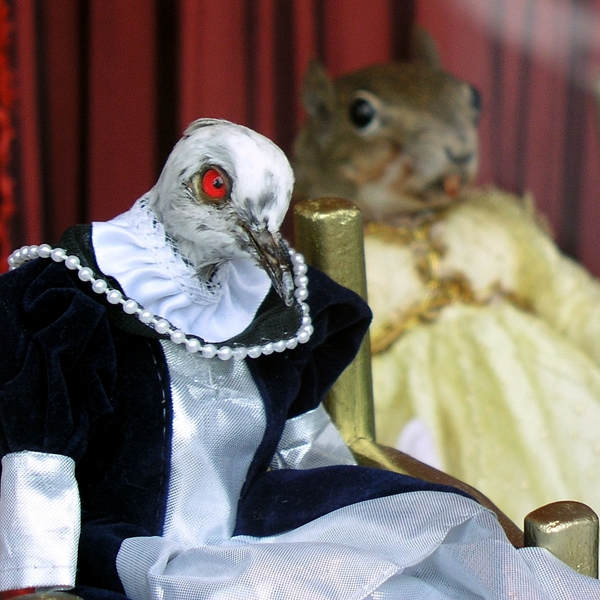
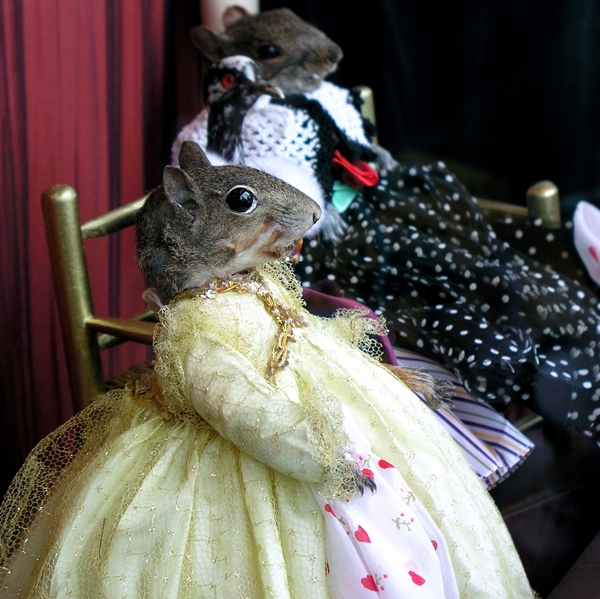
We’re a fan of good headlines. I spend a good bit of my work time each week writing them for a daily newspaper, and in fact I’ve just taken first place — for the second time — in the New Jersey Press Association’s Better Newspaper Contest in the Best Headlines, Newspapers Under 60,000 Circulation category. I can’t claim the one on this post, though; it popped up recently in The New York Times on a review of a book about taxidermy. It reminded me of these pictures I took on Haight Street in San Francisco in late January. Photographing through a window is usually not recommended. You often get unpredictable glare, reflections, and may end up with a photo of yourself taking a photograph. But if you are careful, you can capture a magic memory. Loved to Death is a curiosity, taxidermy and vintage everything store. The more usual deer and elk heads are inside. It’s not the kind of shop one happens by every day.
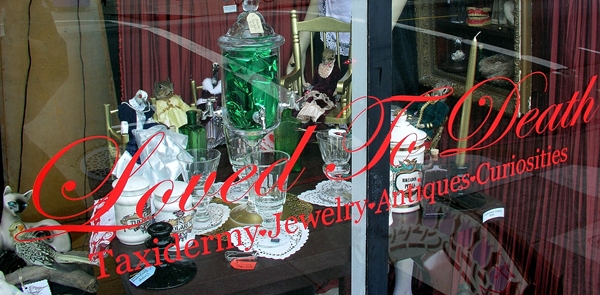
SMYFLoved To Death600

SMYFStuffed600

SMYFStuffedTWO600


Philadelphia, Here I Come !

There are few things that signal spring as brilliantly as the Philadelphia Flower Show. I’m planning to arrive one afternoon this week only 90 minutes after leaving New York City by bus. I’ve made the trek each year for several years, but didn’t last year because the day I’d set aside turned out to be the worst travel day of the year in New Jersey. Blizzard conditions lowered the speed limit to 20 mph on the New Jersey Turnpike that afternoon. A big disappointment. Understand that normal snow falling, even pouring rain, is no problem, as the Convention Center is only a couple of blocks from Philadelphia’s Greyhound station. Never been? You should go! This year’s theme is Passport to the World, and the show runs through next Sunday. Here are some of the visions I saw in 2007.

ShowFountain600

The show’s theme in 2007 was Ireland and its gardens. Each show has acres of displays by landscape firms from around the country, every one showing creative ideas.  Above is a simple recirculating fountain with a totally natural look.

ShowHarp600

This massive display showed what can be done in the garden with recycled glass.  

ShowHarpTwo600

The harp and its mound greeted attendees upon entry, giving plenty of punch.

ShowIrishChurch600

One of the most exquisite big displays was a stone church ruin with a rose garden.

ShowSaint600

Saint Fiacre is the patron saint of gardening. He left Ireland in the 7th Century for France, where he joined a monastery. Granted a swatch of forested land, he asked for open land, and the legend says when he was told he could have as much land as he could till in one day that trees and bushes miraculously uprooted everywhere he touched the soil with his spade.

Show1stCactus

I’m including this for my friends who grow cactus. Yes, there’s a Philadelphia Cactus and Succulent Society. A good bit of the show is about competitions for best specimens, best arrangements, best table decorations, best room decorations, best miniature displays, etc. To be recognized by the judges of the Pennsylvania Horticultural Society is a great honor, and the organization works every day of the year in schools and in public education. Many displays teach conservation. The annual Flower Show is only one of the Society’s major activities.

ShowCactus600

Another winner. There’s always a plant of a kind you’ve never seen before.

ShowOrchid600

And there are always orchids of surpassing beauty.

ShowSucculent600

The individual plants that make the cut and are displayed can be viewed up close.

ShowPicture600

There’s also a competition for decorative arts utilizing plant materials, so there are many framed examples of pictures pieced together with petals and fibers.

ShowBigFountain600

The view behind this shimmering fountain gives a sense of the size of the exhibition hall.

ShowOverTop600

Too over the top for your taste? Keep moving. Something pleasing is just steps away.

ShowCottage600

Perhaps a quaint Irish cottage with a splashing waterfall.

ShowGardenWinner600

Wouldn’t you love a garden like this to welcome you home? It won a big silver cup.

ShowSwamp600

So, the first of three last photos — from 2008!  The theme was Jazz and New Orleans, to give us a reminder of all the heritage that Hurricane Katrina threatened. This bayou scene had swirling fog moving on the water below the mannequin.  

ShowNOhome600

A silver bowl went to this New Orleans front yard display.

ShowFrogs600

Frogs in their finery. Perhaps now you understand why I like to spend a late winter day in Philadelphia each year.


Arizona Sunset

“Arizona Sunset” was printed 16 by 20 on canvas last month. I was visiting the Desert Botanical Garden, which sits among the red buttes of Papago Park between Phoenix and Scottsdale, Arizona, one recent February when I noticed an aircraft leaving a trail high in the sky. Some of the cacti at the arboretum are 80 years old, dating from before the garden’s opening in 1939. I thought an elemental contrast might prove interesting. The setting sun is at my back and illuminates this looming stand of cacti. I’m pleased with it printed on canvas. Looks great in all levels of light, and hangs in my dining room, a modernist touch in a Victorian home built a generation before the Wright Brothers ever saw Kitty Hawk, N.C.

FacesSunset600wide


Catching up with Sheila Simpson

I had lunch at a lovely Turkish restaurant on the Upper East Side the other day with Sheila Simpson. I always describe her to friends as “my friend who’s a concert pianist,” hoping they’ll be as impressed as I always have been. Sheila and I have known each other since 1973, and share that special bond that New Yorkers have when we’re non-natives but know this is the only place for us to be. Sheila started life in Belzoni, Mississippi, where her mother ran the local dance school, and she was a child prodigy, playing her first solo piano recital at 11 and performing as a soloist with three different orchestras by age 15.  A graduate of the University of Alabama, she received her master’s degree in piano performance from the Manhattan School of Music, graduating with honors. It was sometime after that, during the period she worked as a rehearsal pianist with the Alvin Ailey Dance Company, that we got to know each other. She was at that time studying with Arminda Canteros, a much-loved Argentinian piano teacher whose playing made tangos a permanent part of my music appreciation. One of Arminda’s concerts at Alice Tully Hall in the ’70s was one of the highlights of my life, and I’ll always thank her for turning me on to 20th century Spanish and Latin American music. I love it when Sheila plays anything by Ginastera.  

Over the years, Sheila has performed at Merkin Hall, in the Lincoln Center neighborhood, in 2001, and at Princeton Theological Seminary in 2004. Both recitals are available on CDs through Sheila’s website, SheilasPiano.com. She’s performed at the United Nations, and around the world.  In the past few years I’ve also heard her perform two recitals in the gallery at Tenri Cultural Institute on West 13th Street, presented by the Leschetizky Association, which was founded in 1942 by pupils of Theodor Leschetizky (1910-1915) to perpetuate his memory. He was one of the founders of the St. Peterburg Conservatory of Music, one of his greatest pupils was Paderewski, and one of his famous sayings was “No art without life, no life without art.” Sheila belongs to the Association, and passes along her own knowledge of being a virtuoso to her many students. A musical life is a rich one, and one that keeps on giving, generation after generation.

It was to deliver a few prints I’d made of the picture below, which I snapped during the last round of applause at last May’s recital at Tenri, that took me to the Upper East Side the other day.

ShowMeSheila600wide

Sheila and I did studio portrait session last fall, in preparation for this year’s round of concerts. Here are some of the results.

ShowMeSheilaFlyer

ShowMeLips

ShowmeSheilaWhite

ShowmePillows

In October, Sheila played Saint-Saens’ 2nd Piano Concerto in a concert with the Pine Bluff (Arkansas) Symphony, and because most of her New York friends couldn’t attend, she invited us to either of two preparation runthroughs she scheduled in one of the rooms upstairs at Steinway Hall, on West 57th Street. A pianist friend of hers, Francisco Miranda, played a transcription of the orchestra’s part while Sheila played the piano solo she would perform a few days later. Three movements, each very different, going as she said in the introduction “from Bach to Offenbach” in style. Only one melody in the whole thing that I recognized, but enjoyable for this non-classical non-musician’s ear and interesting enough to hear again sometime.

Lighting in the room was difficult, with strong light reflected in from the street through a big window and the room otherwise lighted with harsh florescents in two colors beaming down from rows of old factory-like fixtures. But I got this shot of Sheila and Mr. Miranda after they entertained us.

I always feel very priviledged when I hear Sheila play because she really puts the music across, producing it with a directness and intimacy — and obvious dexterity and command, almost always playing even the most complicated pieces from memory — but with no “look at me” ego thing going on. Sheila simply shares her love of music and her gift for performing it, and every listener feels it and learns. One of the glorious pieces I’ve heard her play several times is an arrangement for solo piano of Elgar’s “Nimrod” from the Enigma Variations that her husband Tom adapted for her as a gift. I can’t imagine what it must be like to be one of Shelia’s piano pupils trying to learn to play and reflect her high standards. But of course not everything is as easy as taking a good picture of an attractive woman.

ShowMeFranciscoMiranda


3 photos in Vital Voices, October 2009

While selecting photographs to show in the 2009 Vital Voices exhibition in the Jersey City Artists Studio Tour, the influence of three master photographers seemed obvious. I’ve loved their work for decades, so I wasn’t surprised.  There’s not a photographer alive whose vision has not been influenced, either directly or indirectly, by their ways of seeing.

“The Quartzsite Beauty Salon, Quartzsite, Ariz.” – The town of Quartzsite, pop. 3,354, is in western Arizona near the California border. A popular RV camping ground for winter tourists, its gem and mineral sellers and more than a dozen general swap meets attract more than a million people a year to the only town on the interstate between Phoenix and California. It was a bright February day when I stopped there for lunch at a just-the-basics restaurant, and across the street was a beauty parlor waiting for business to walk through its door. 

Quartzsite Beauty Salon Show Me Your Faces 

Revered for finding quiet beauty in unadorned people and small-town architecture, Walker Evans was born into wealth and was educated at Phillips Academy and Williams College before dropping out and spending a year in Paris, then joining the New York art crowd. He is best known for documenting rural life and poverty during the Great Depression for the Farm Security Administration. His book with the author James Agee, “Let Us Now Praise Famous Men,” focused on three sharecropper families in southern Alabama, was published in 1941. His 1938 show at the Museum of Modern Art was the first the museum devoted to a single photographer; it staged another comprehensive exhibit in 1971. Walker Evans died in 1975, having spent several years teaching at Yale after writing and editing for 20 years at Time and then Fortune magazine. Except for 1,000 negatives owned by the Library of Congress and in the public domain, the Metropolitan Museum of Art owns the copyright on all of his works in all media.  He is quoted as saying his goal as a photographer was to make pictures that were “literate, authoritative, transcendent.”


“Calla Lilies, San Francisco, January 2009” – It was raining when my plane landed and in my first walk around my friends’ neighborhood I spotted these callas, still wearing raindrops, growing in a cement trough squeezed between the driveway and front staircase of an otherwise ordinary home.

Calla Lilies Show Me Your Faces

Considered the quintessential woman photographer of the 20th century, Imogen Cunningham’s first job out of college in 1907 was making platinum prints in the darkroom of Edward S. Curtis. The photographer whose work documented the lives of the various North American Indian tribes operated one of the most successful portrait studios in Seattle. Cunningham’s independent college study had focused on chemistry and optics, as photography was such a young medium that there were no courses discussing “vision” or “expression.” It was Pictorialism – doing in dreamy, soft-focus photos what painters had been doing – that was the dominant photographic style. Always on the cutting edge even as she raised three children and operated her own successful Seattle portrait studio, Cunningham by the early 1930s was a leading Modernist photographer, a co-founder of the Group f/64, which valued sharp focus and helped bury the Pictorialist style, and her iconic studies of magnolia blossoms and other flowers, as well as nudes, movie star photos for Vanity Fair, and industrial landscapes, moved the medium during the 1920s, 1930s and 1940s. In 1945, Cunningham accepted a teaching position in the first fine art photography department at the California School of Fine Arts, and continued to take photos until shortly before her death at 93 in San Francisco in 1976.


“The Pennsylvania Woods” – In my photo shot from a walkway at Falling Water, the Frank Lloyd Wright house, we are looking down, across and up into a wilderness area that is under the protection of the Western Pennsylvania Conservancy.

The Pennsylvania Woods 600

From the 1940s through the 1970s, Eliot Porter’s nature photography set new standards in color photography, and in presenting the natural world, at a time when most “serious” photographers were limited to black and white and color was considered “too literal.” Porter’s entire body of work, and in particular his first book for the Sierra Club, “In Wilderness Is the Preservation of the World” (1962) with text from Henry David Thoreau, gave early momentum to the modern conservation movement. Porter died at age 89 in 1990, and bequeathed his professional archives, containing 10,000 prints, 84,000 color slides and transparencies, and 4,400 black and white negatives, to the Amon Carter Museum in Fort Worth, Texas. A biography and a review of a book about Porter can be found here.


Leon Russell — In his presence

I don’t know that I’ve ever read much rock music criticism. I guess it’s like all writing about art — it helps readers find what they may not have known they wanted to listen to, helps win recognition for new artists, creates buzz – but once you know who moves you reading words and analysis can seem very beside the point.

Case in point: Leon Russell. I just ran across a quote on the Internet from Robert Christgau’s Record Guide (1981) review of the singer’s 1970 debut album as a single artist (backed by pals Harrison and Starr, Wyman and Watts, Clapton) that says that while his singing is ”distinctive, and valid, it grates,” and that the album’s impressive songs would be more so if someone else were doing the vocals. Calling the album “weirder than you would expect,” Christgau gave it a B+. Well, thanks for listening, I guess.

Myself, the moment I heard Leon Russell would be headlining Hoboken’s Art and Music Festival this past Sunday afternoon, appearing at 4:30, I knew where I’d be, rain or shine. The first few hours of the festival did feature rain, and after it stopped the sky stayed gray and heavy, which cut attendance and seemed to keep smiles at a minimum, but the open tent at the foot of Washington Street wasn’t big enough to hold the appreciative crowd that loved what it was hearing. 

Leon at 67 has lost a lot of the bounce he had 40 years ago; time does that. He sat fairly motionless in his Hawaiian shirt and white cowboy hat, and behind big shades. But his hands were moving up and down the keyboard and his mouth was at the mic, and the four much younger men he had with him, each a fine musician in solos, provided the visual oomph, the guitars and drums and backup vocals. The voice the noted critic took exception to so many years ago is still strong. Russell still owns every one of his hits. “Rollin’ in My Sweet Baby’s Arms,” “Georgia On My Mind,” “Delta Lady,” “Wild Horses.” And lots more, all rendered with maturity and majesty and fun.

I realized I hadn’t heard what’s categorized as Southern rock in so long I’d almost forgotten its power. In fact I was primarily there because I needed to hear him sing ”A Song for You,” and until I heard it and a lot of mist got in my eyes I had indeed ”forgotten” why. A friend who’s now gone home to Australia used to sing it in piano bars every time she was asked, and she was usually singing it to one of my best friends, her partner, now gone. I love the both of them ”where there’s no space and time.” And on stage, Leon Russell was alone now and he was singing that song for us.

Then the younger guys came back and they all did “Roll Over, Beethoven” and “Good Golly Miss Molly,” and some other hits other people had way back when.  Which was only natural, since according to one biography on the Internet Leon Russell was about 15 when he was lying about his age so he could tour in support of Jerry Lee Lewis. He’s come a long way from Lawton, Oklahoma, where he was born and started studying classical piano at age 3. A success in the music biz long before he became a star, he was the arranger of Ike and Tina Turner’s “River Deep, Mountain High” as well as a member of Phil Spector’s studio group and a collaborator with the Rolling Stones. I know a lot of people are glad Hoboken was one of the stops along the way in a long life filled with music that rolls like a river.

 Leon Russell Delta Lady

Leon Russell A Song for You


  • Recent posts

  • Categories

  • Tags

  • Archives

  • Copyright © 2012, | ShowMeYourFaces is proudly powered by WordPress All rights Reserved | Theme by Ryan McNair