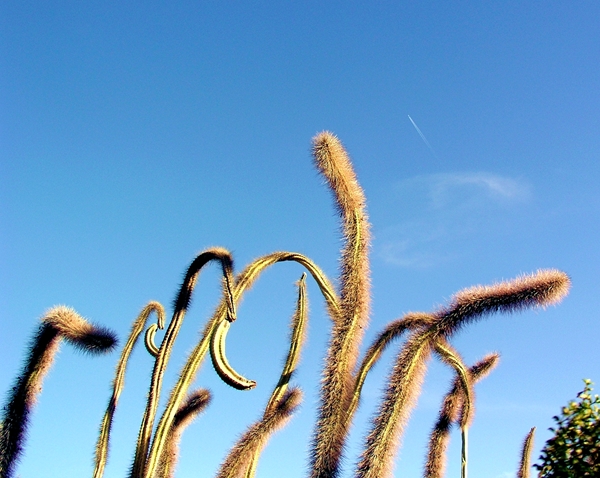
I’ve always loved the Statue of Liberty. It was not yet in New York Harbor when my father’s family immigrated from England, arriving in Marblehead, Mass., in 1801 in time for the birth of his great-great-grandfather, but the statue welcomed my father when he and several thousand other troops sailed home from England on the Queen Elizabeth after World War II. I have lived within easy sight of it for more than 40 years now, and a glimpse still gives me a thrill. My father saw it up close from Liberty State Park when he visited Jersey City in the 1980s. I still have the tiny replica he bought as a souvenir. When the statue’s centennial was celebrated in grand style on July 4, 1986, we were watching the fireworks on a television in a motel in southeastern South Dakota. We and the rest of his surviving family were visiting his tiny hometown and birthplace, which was having its own centennial celebration.
This photo was taken in November 2013. The western sky was exceptionally clear that early evening and the light seemed to go on and on. As I moved around Battery Park, at the tip end of Manhattan, the last of the day’s tourists were coming off the ferries that had taken them out to Liberty Island. Areas in the park were still fenced off and restoration was ongoing more than a year after Superstorm Sandy damaged so much. Some of the enormous office buildings nearby were still being powered by noisy generators parked in the streets. The long sunset allowed me to shoot the statue from several vantage points, and of the 14 frames that I’ve saved from the shoot I like this one best. It was taken as I left the park, stopping every 20 feet or so to turn back and take another shot. I had it printed on canvas, 36 inches wide, and in March it was featured in BROAD VIEWS: Landscape Photography in 2014 at 58 Gallery in Jersey City. “November Sunset” will be presented to the New York Civil Liberties Union later this year for permanent display in its offices, where our liberties are claimed, defended and fought for every day our nation’s courts are in session.
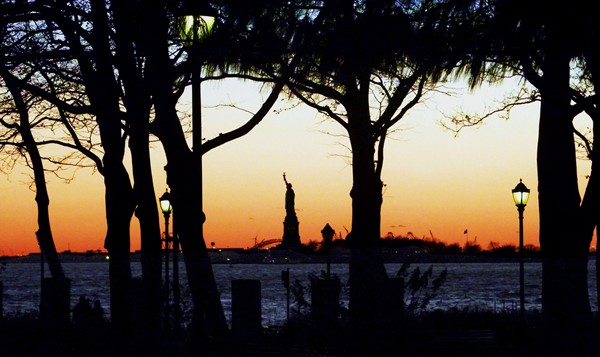
Drawing inspiration from such disparate works as Ingres paintings from the early 19th Century, a poster I remember seeing all over New York 40 years ago for a Joffrey Ballet production, and those pulsating hippie light shows of the Sixties, I shot all these photos in a single session. I wanted in each to merge my model with a projected image — but do it my way, no Photoshop — to create a modern image with classic beauty and some sense of mystery. Perhaps at first glance one thinks “How was that done?” but the perceptive viewer will see the images for what they are: photographs made with photographs. And proud photographs, not paintings.
It was a delight to find when they were exhibited in the 2011 edition of curator Tina Maneca’s Exquisite Corpse, an October show that opened during the Jersey City Artists Studio Tour, that each photo was a favorite of at least one visitor to the show. Of course some in the series drew positive comments from many people, but it was nice to know that each had at least one admirer. All were printed on metal, with glossy finish and ready to hang with no frame, and “In Her Realm,” below, is my largest such print to date — 45 inches wide.
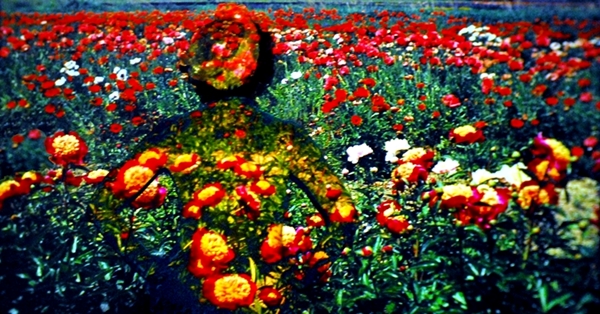
Below is “Recognition.” It’s printed 24 by 24.
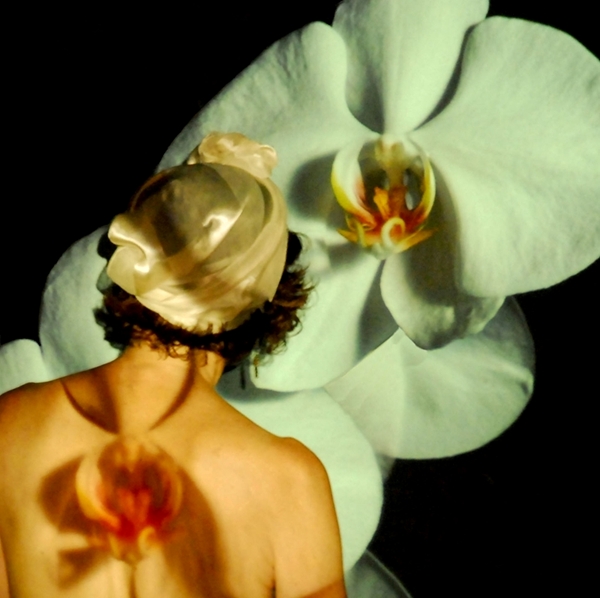
“Sosei,” below, is also 24 by 24.
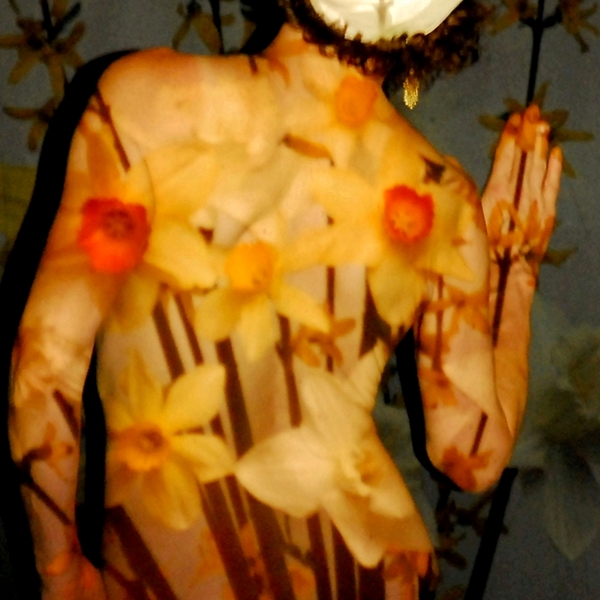
Below is “In the Garden,” printed smaller, perhaps 15 inches wide.
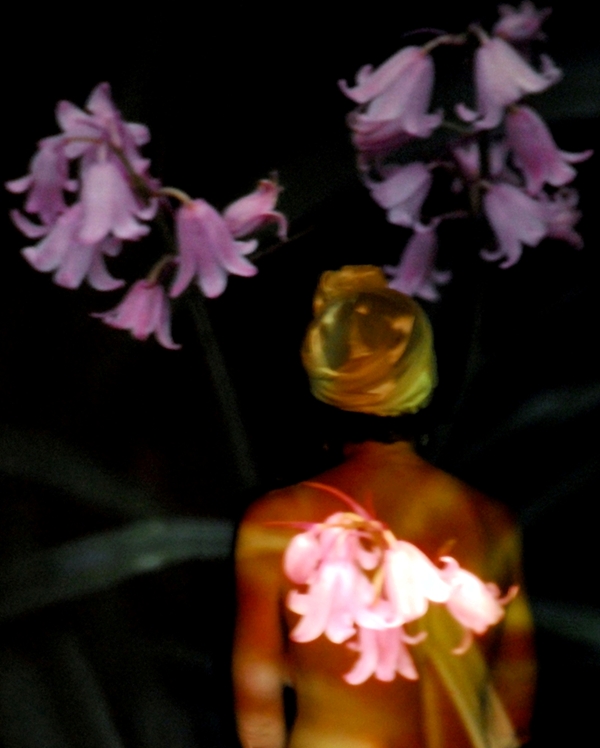
“Forest Dawn” was not seen in Exquisite Corpse, as the print was damaged by a worker taking down the previous show in the space.
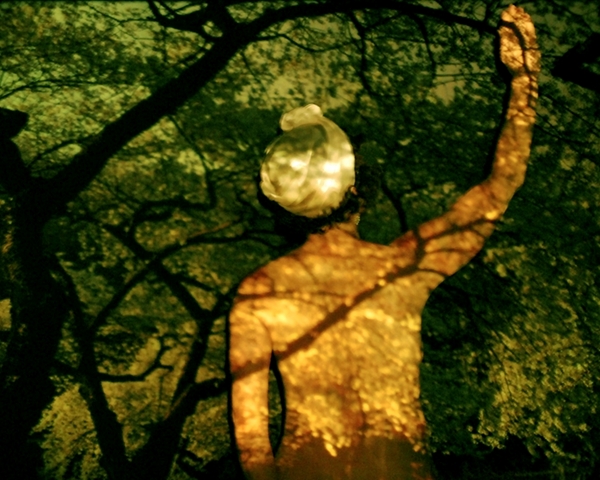
Fire? Ecstasy? Cherry blossons? Wagner’s surging music? All there. “Greeting Spring” is large, about 36 inches wide.
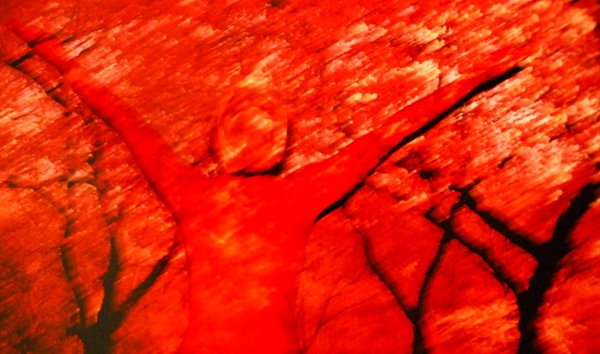
“Aspiration” is perhaps 20 inches wide.
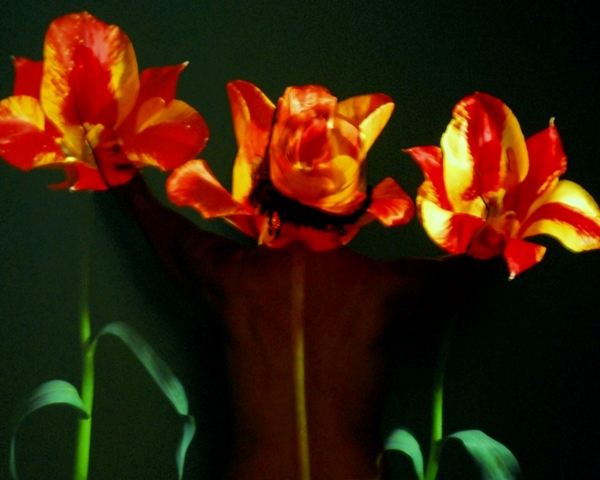
“Discovery” is about 20 inches wide, too.
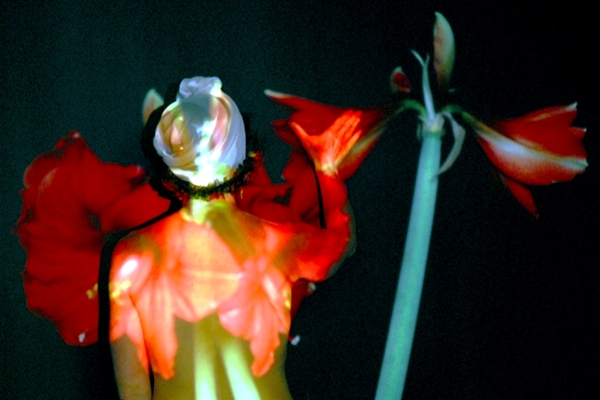
“Peace” is 20 inches square, and was used in one of the many 3-artwork assemblages that curator Tina Maneca put together.
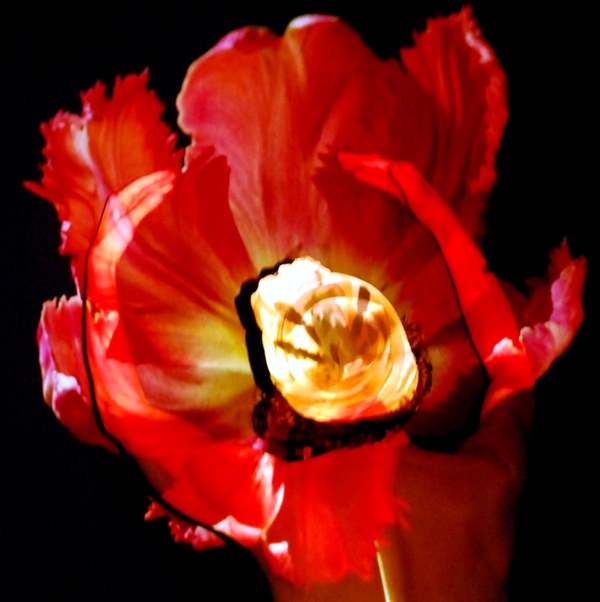
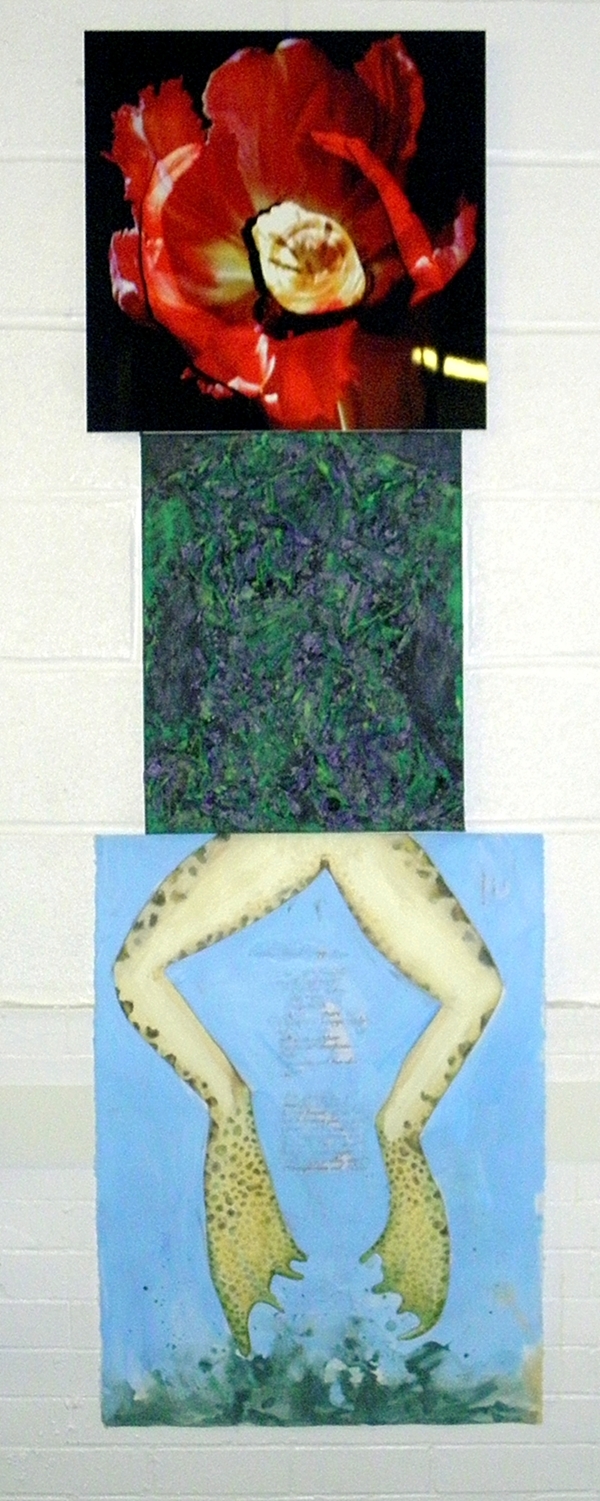
Below is “Peace” and the works shown with it. Each assemblage in Exquisite Corpse has a “head,” a “torso” and “legs.”
My model visited the show. In her realm, indeed!
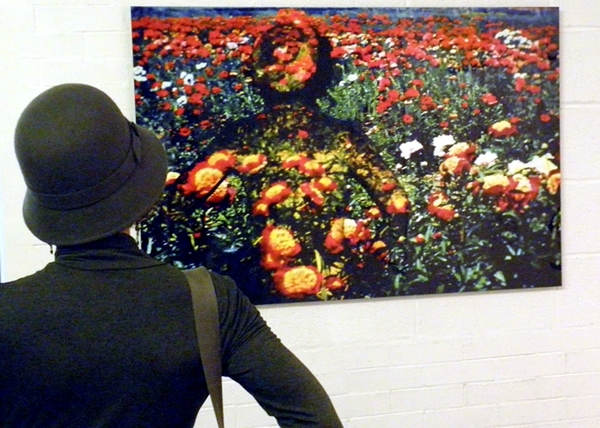
Just after New Year’s, when Celeste Governanti, the proprietor of Made with Love Artisan Bakery & Cafe, invited me to mount a photography show in the far-off month of June, she asked if I could include one or two things that related to Fathers Day. Hmmmmm, I wondered. I’ve never really done genre photos — I’ll let someone else do greeting cards and stock photos of beaming models and rented offspring. Still, I had a request to fill and I kept it in the back of my mind. Soon I was off to San Francisco for the Noir City 8 Film Festival at the Castro Theater, and while I was having a late breakfast between Sunday screenings of bank heist and blackmail melodramas in glorious 1950s black and white I noticed two dads and their daughter at the next table. They live in Oakland, have been partners for eight years, and were having brunch before taking Amelia to Samoan church for an afternoon service. I promised them a family smile shot, which was easy to snap against a fancy grilled doorway next door to the restaurant on busy Castro Street, and also posed them under the huge rainbow flag that flies above Castro and Market. Then we all looked down Market Street, with its palm trees and signs and street car cables and traffic — the reality of life there. Our shoot took only 15 minutes and their family has two portraits and I got a Dads Day shot for my show. I call this “Fathers Show Us the Way.”
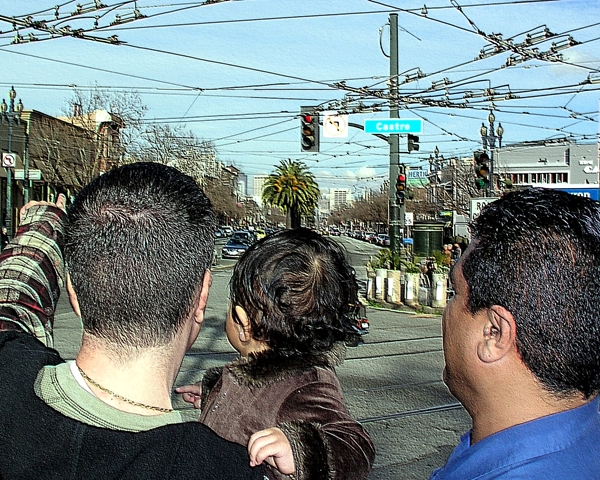
Some weeks later, I became acquainted with a couple in my neighborhood who have a little boy who’s just graduated from being a rug rat to zooming around on his own two feet. I’ve had this setup in my mind’s eye since seeing it in another photographer’s display a couple of years ago. I don’t feel at all guilty about stealing his idea; he probably stole it from someone else. Besides, the feet in his shot were so perfectly lovely, so sentimentalized, so “commercial.” I’d never do that, and I haven’t. This shot was taken Memorial Day afternoon at the park at the end of the block. The boy’s feet will never again be this small as he grows and grows and grows, and he’ll always have this picture as a memento of his babyhood. No doubt that he’s with Daddy. I call it “Tootsies.”
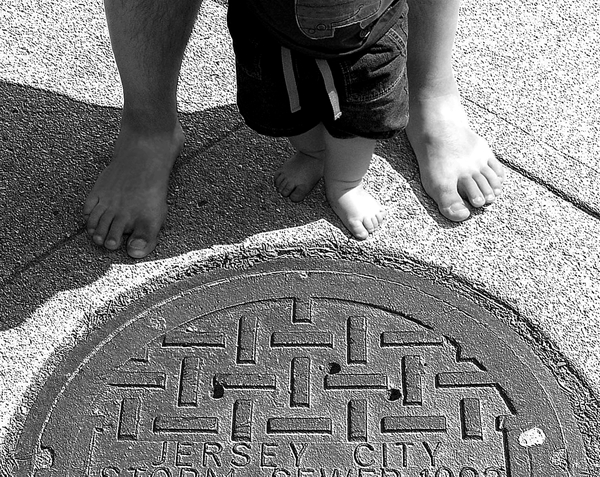
And here’s how “Tootsies” looks in the window at Made with Love. The family adores it, and so does Celeste. Fits perfectly with Fathers Day, doesn’t it.
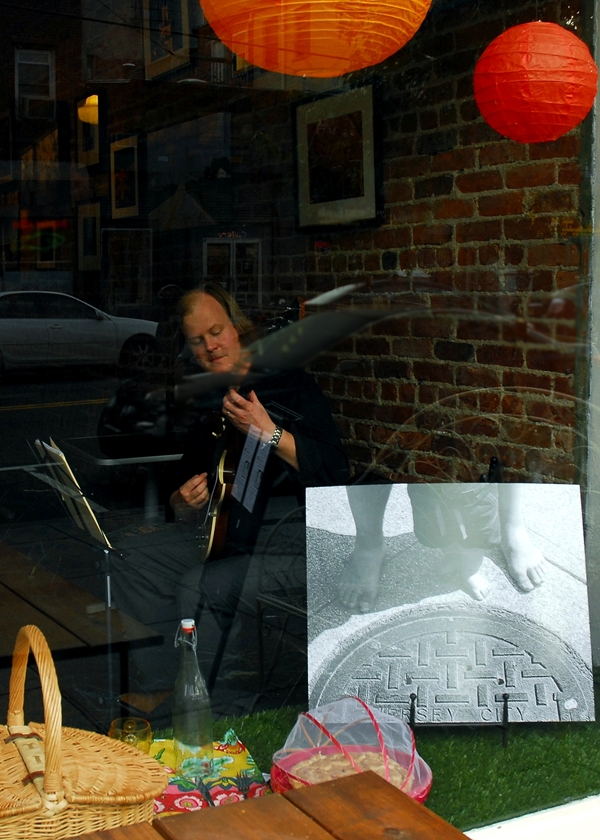
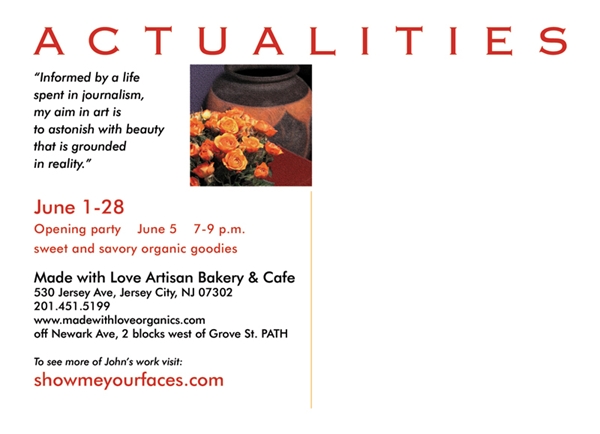
You’re invited to my first solo show, on the walls during the whole month of June at Made With Love Artisan Bakery & Cafe, in Downtown Jersey City. An opening party is planned for Saturday, June 5, from 7 to 9 p.m. Susan Newman designed my postcard. 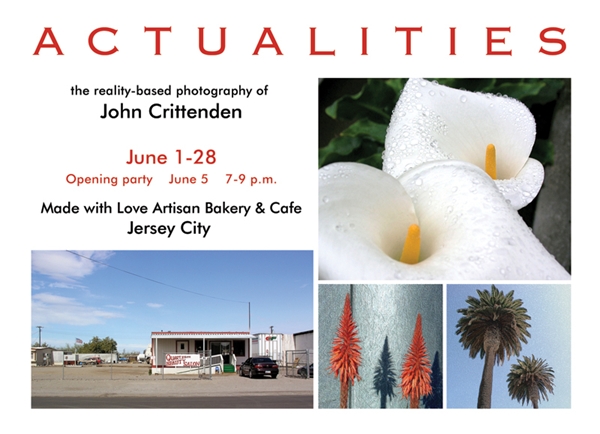
Perhaps my life as a photographer would be easier, or at least lighter, if I were more comfortable with certain conventions. I well remember when photographs weren’t considered serious unless they were black and white and presented in a white or cream mat behind glass inside a black wood or metal frame. Later, natural wood frames became acceptable, and now white wood frames are seen everywhere. I understand some of the reasoning. You’re supposed to be presenting the photo, featuring it while protecting it, and there should be nothing distractingly different in a room that contains eight or ten or a dozen photographs. Each image should be a focus and nothing should take away from it. I do get that. But there are so many options available today that I can’t accept uniformity as any kind of operating principal. Not with photographs being printed on metal, on plastic, on canvas, and on other media. And so I wrestle with deciding how I want to see every particular image on a wall.
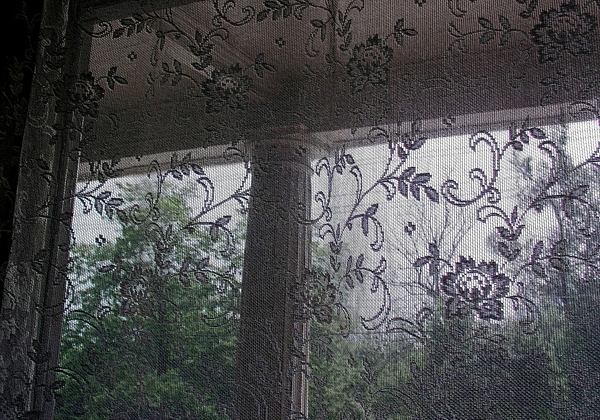
Below is a photograph I took in southwestern Pennsylvania only a few miles north of the border with Maryland. We are looking out to the porch and trees beyond a roadway from inside the Stone Inn, a circa 1822 building on the Braddock Road, which dates from the 1750s and was incorporated into one of the nation’s first improved highways built by the federal government. Started in the early 1800s, what became known as the National Road carried multitudes of settlers and travelers from Baltimore west to Ohio. Now a large and comfortable restaurant with a bed and breakfast operation upstairs, the inn has always been a stopping place for rest and hospitality. I found the dining room to be one of those places with a pleasant, calculated historic feel but no particular antique vibe. I found the outside view compelling. The thrill, if you feel it, is in looking out over a byway that’s been busy with commerce every single day for centuries and a landscape that has hardly changed except as it grew and died back and then renewed itself. I wanted to somehow capture that, without being too literal or stuck in any particular year.
After much debate with myself, I had this photograph printed large and on canvas, and it drew many favorable comments in my first solo show of my work, in June at Made With Love Artisan Bakery & Cafe in Downtown Jersey City. Looking out across time is someting many of us enjoy doing, and this will add an architectural element to any wall it’s on.
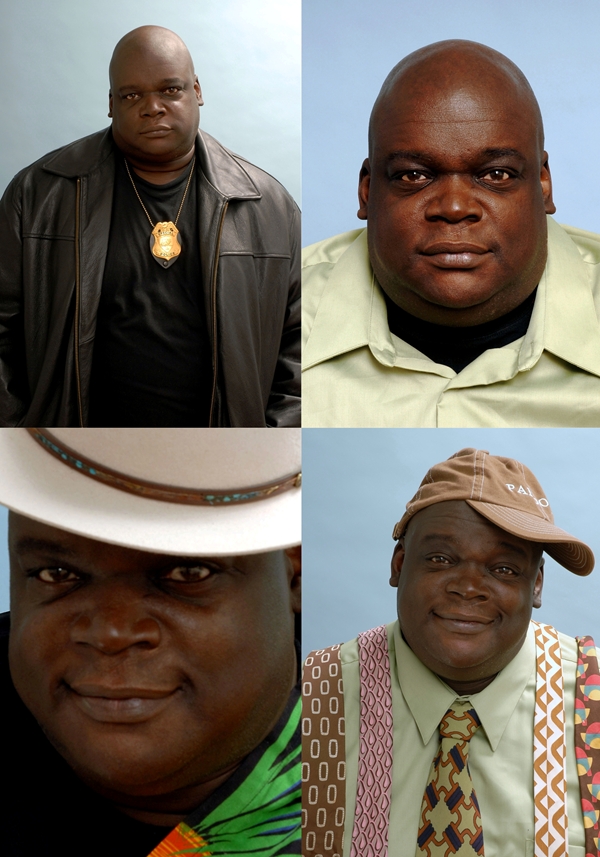
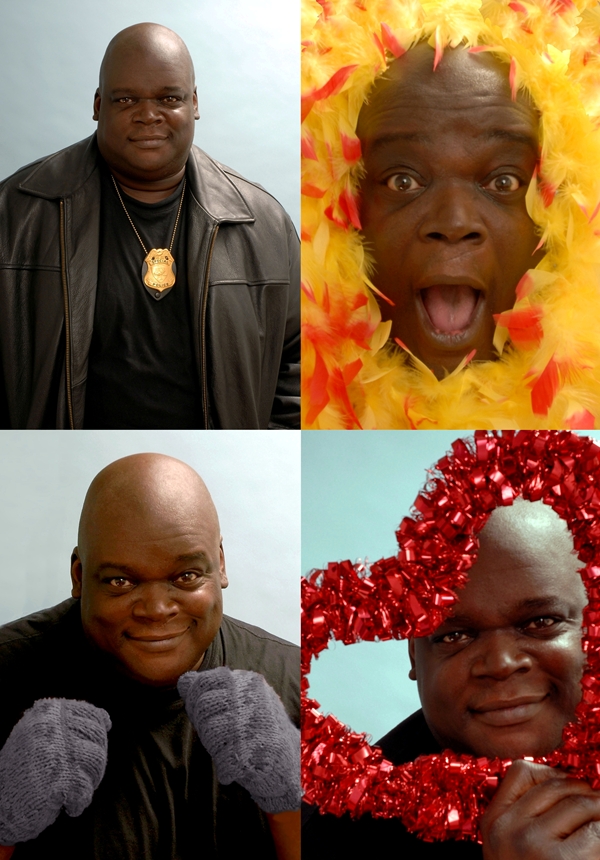
You’ve seen Vernon W. Campbell as good cops, bad cops, ornery inmates, bouncers, all sorts of tough guys. He’s actually a fine gentleman, helps a bunch of local performers navigate show business, and keeps busy himself as a working actor with SAG, AFTRA and Actors’ Equity affiliations. Andy Garcia’s “City Island,” which opened in mid-March, has Vernon’s latest big screen appearance, and he’s been seen in “Mercy,” the TV hospital drama. One of the great Oscar underdogs, Mickey Rourke’s “The Wrestler,” has him playing the bouncer at the strip joint where Marisa Tomei dances. HBO’s “Oz” is also on Vernon’s resume. This winter he said he could use some new headshots, so I told him to show me his faces and we did a shoot the afternoon before he got on a plane to Hollywood to make the networking rounds of the Oscar night parties. I pushed him a bit to give me more of his range, and here’s the result. I asked if he’d ever consider playing a happy mailman or a kiddie show character. “Of course,” Vern smiled. “I even want to play Shakespeare before I’m through, just nobody’s asked me yet.”
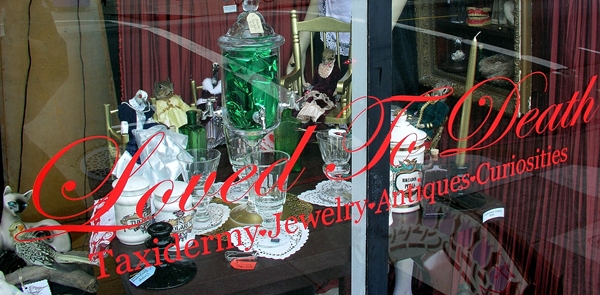
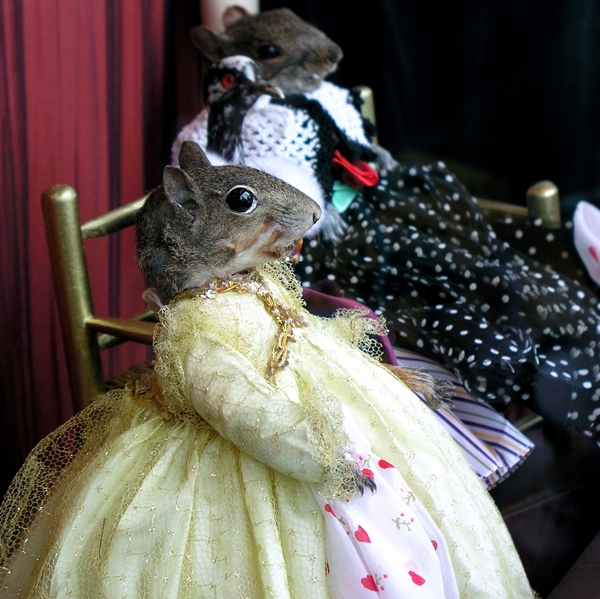
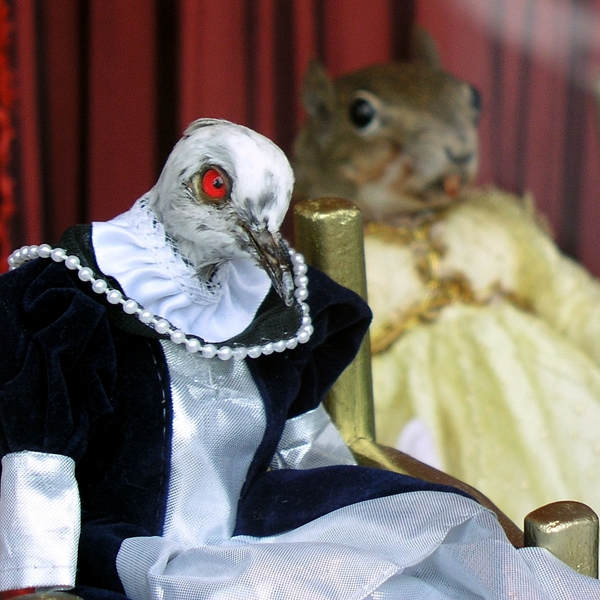
We’re a fan of good headlines. I spend a good bit of my work time each week writing them for a daily newspaper, and in fact I’ve just taken first place — for the second time — in the New Jersey Press Association’s Better Newspaper Contest in the Best Headlines, Newspapers Under 60,000 Circulation category. I can’t claim the one on this post, though; it popped up recently in The New York Times on a review of a book about taxidermy. It reminded me of these pictures I took on Haight Street in San Francisco in late January. Photographing through a window is usually not recommended. You often get unpredictable glare, reflections, and may end up with a photo of yourself taking a photograph. But if you are careful, you can capture a magic memory. Loved to Death is a curiosity, taxidermy and vintage everything store. The more usual deer and elk heads are inside. It’s not the kind of shop one happens by every day.
“Arizona Sunset” was printed 16 by 20 on canvas last month. I was visiting the Desert Botanical Garden, which sits among the red buttes of Papago Park between Phoenix and Scottsdale, Arizona, one recent February when I noticed an aircraft leaving a trail high in the sky. Some of the cacti at the arboretum are 80 years old, dating from before the garden’s opening in 1939. I thought an elemental contrast might prove interesting. The setting sun is at my back and illuminates this looming stand of cacti. I’m pleased with it printed on canvas. Looks great in all levels of light, and hangs in my dining room, a modernist touch in a Victorian home built a generation before the Wright Brothers ever saw Kitty Hawk, N.C.